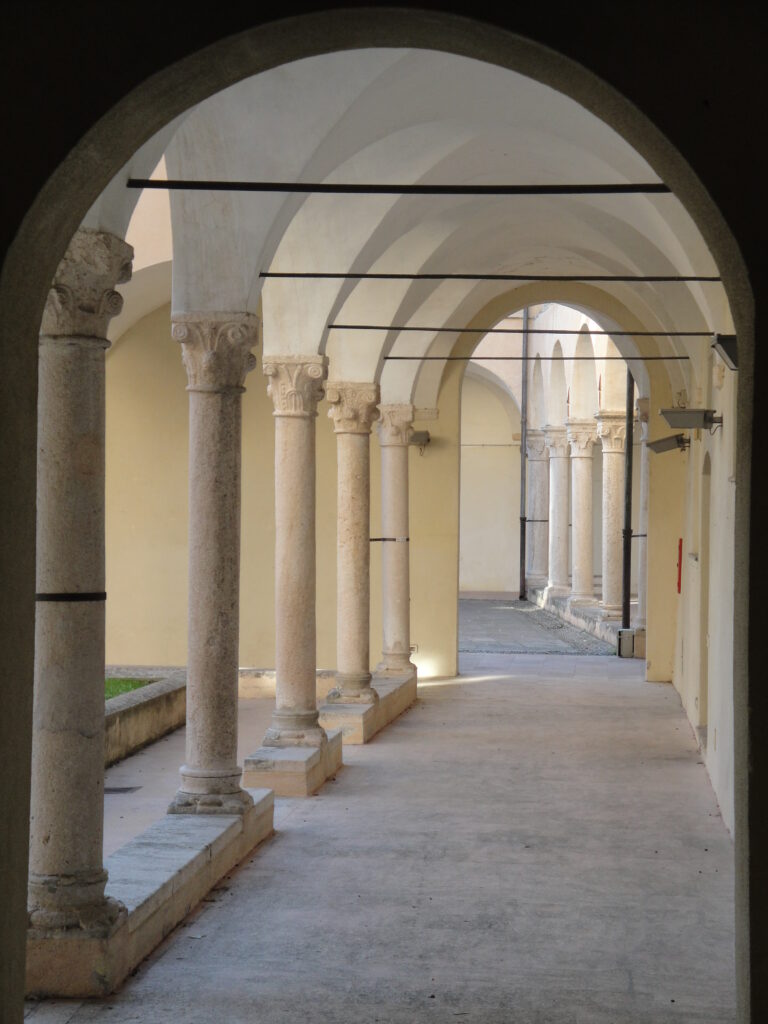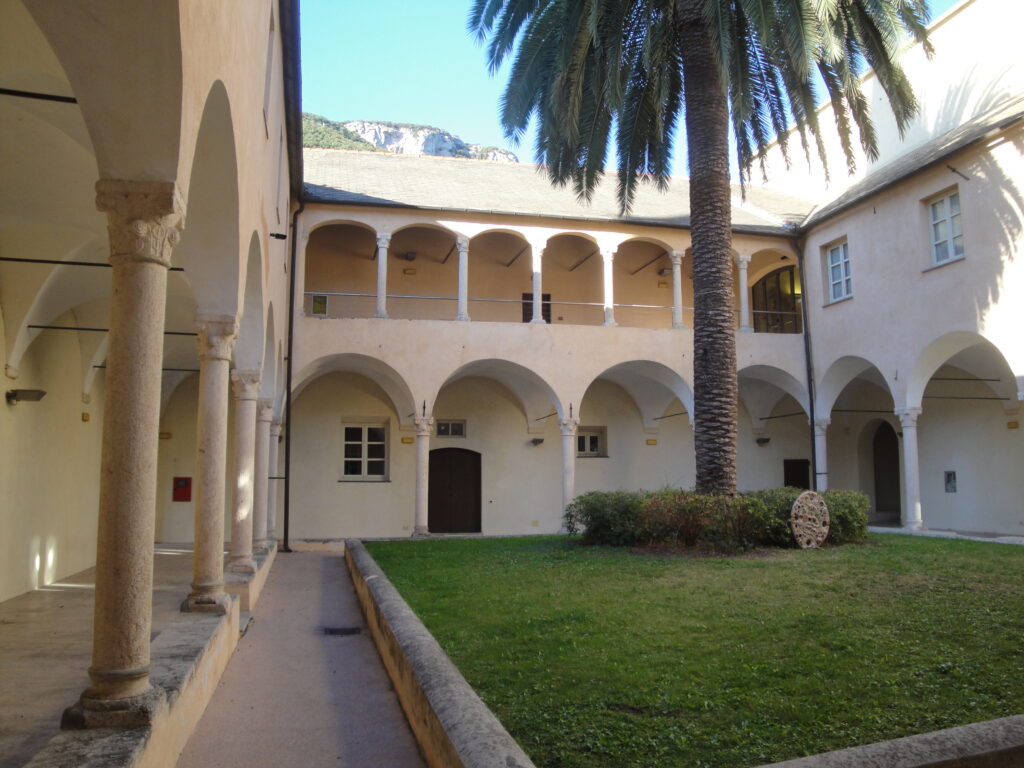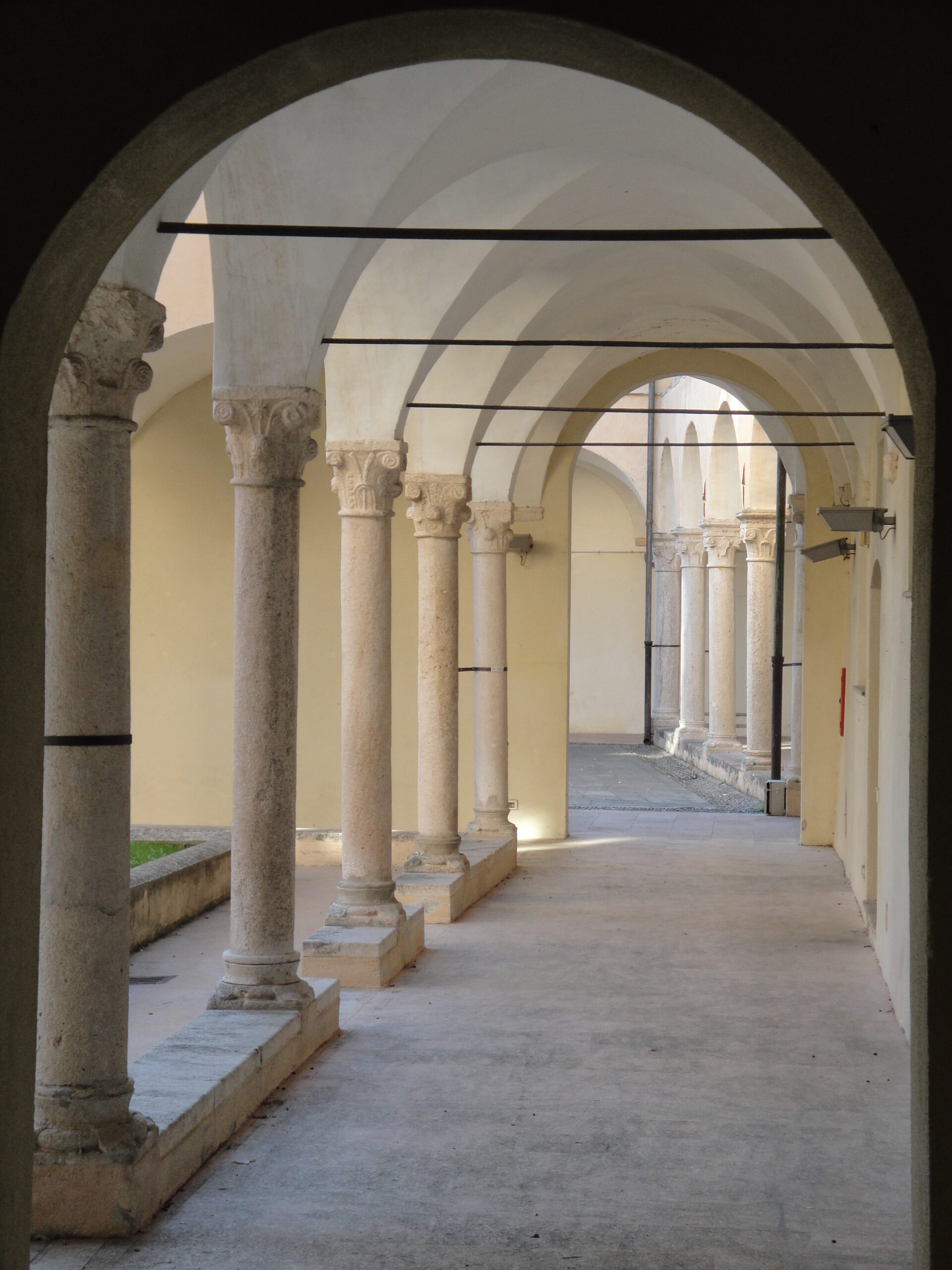

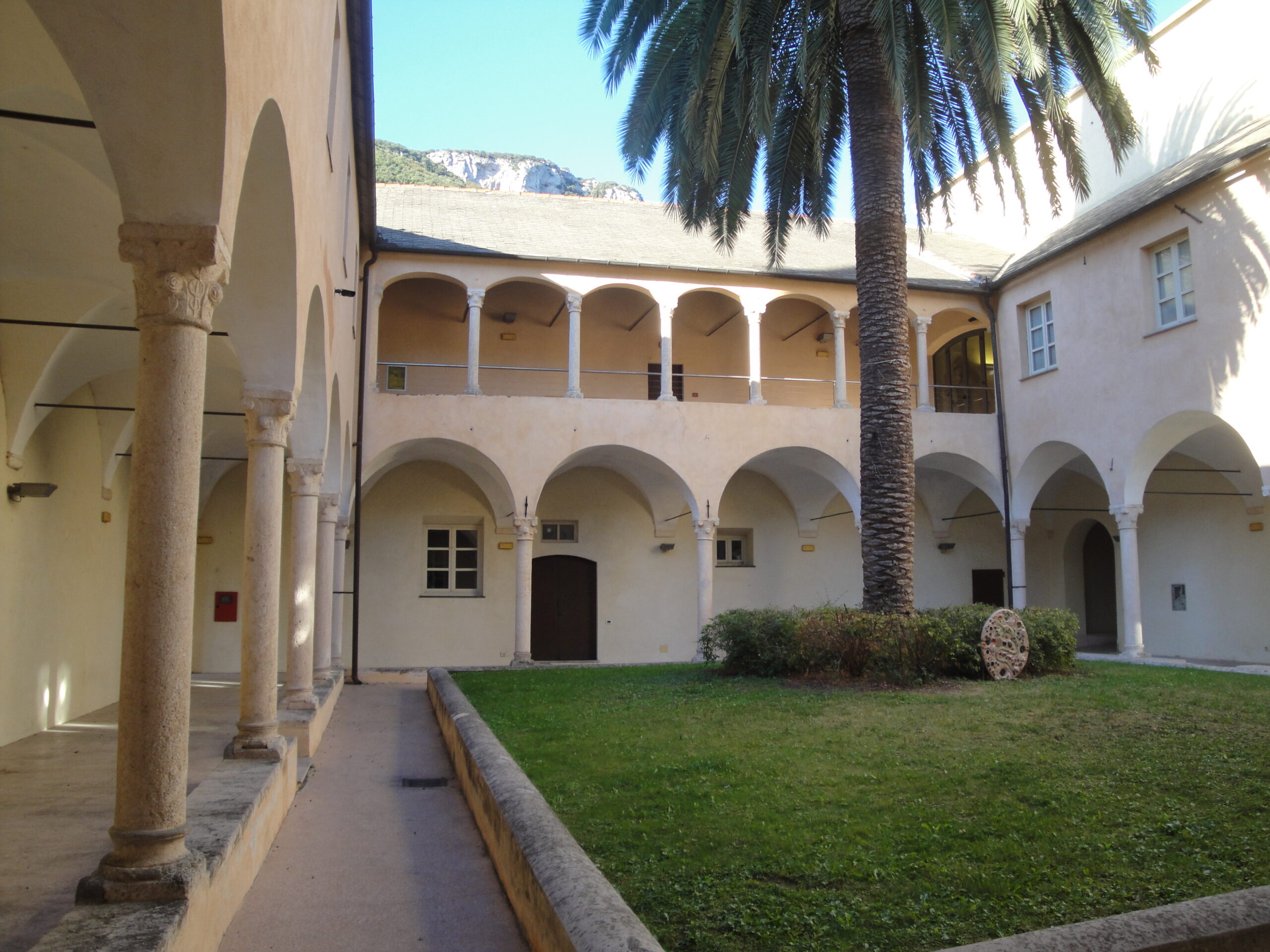
Finalborgo was the ancient Burgus Finarii, founded in the late 12th century by the Del Carretto marquises. Enclosed in the embrace of the walls, its palaces, churches, and Dominican convent make it one of the “Most Beautiful Villages in Italy.” The rich history allows for multiple keys to interpretation. The Del Carretto marquises, who ruled it from the Middle Ages until 1598, were the patrons who during the Renaissance wanted the cloisters of S. Caterina (late 15th century) with columns and capitals in Finale stone, the splendid Castel Gavone, with its imposing diamond tower, the many 16th-century polyptychs. The marquisate was for centuries a strip of Liguria not controlled by Genoa: to maintain its independence it leaned politically on the Visconti and Sforza families. The octagonal bell tower (1463) of S. Biagio testifies to the exchanges, including cultural ones, with the Milanese seigniory: set on a tower of the city walls, it recalls the bell tower of S. Gottardo in Corte in Milan. During the educational outing to Finalborgo we will discover a fresco depicting the punishment inflicted on a Finalborgian priest who was spreading the ideas of the Lutheran Reformation.
After the peace of Cateau-Cambrèsis Finale was acquired by Spain and became its maritime access to the Duchy of Milan: these are the years described by Manzoni in Promessi Sposi. The 17th century was another golden age for the Borgo, which was enriched with monuments according to Baroque taste; splendid are the dressed statues preserved in S. Biagio, inspired by the principles of the Counter-Reformation. Inside the Basilica, the tour guide will show you the balustrade of the high altar, decorated in trompe-l'oeil with a very fine marble Eucharistic tablecloth (1793). Fanciful is the marble pulpit (1765), which bears carved symbols of the Evangelists. Finalborgo's jewels also include the Aycardi Theater (1804), built in the Napoleonic period, an authentic “bomboniera” with three tiers of boxes almost in miniature.
For this activity you can refer directly to Valerio Peluffo