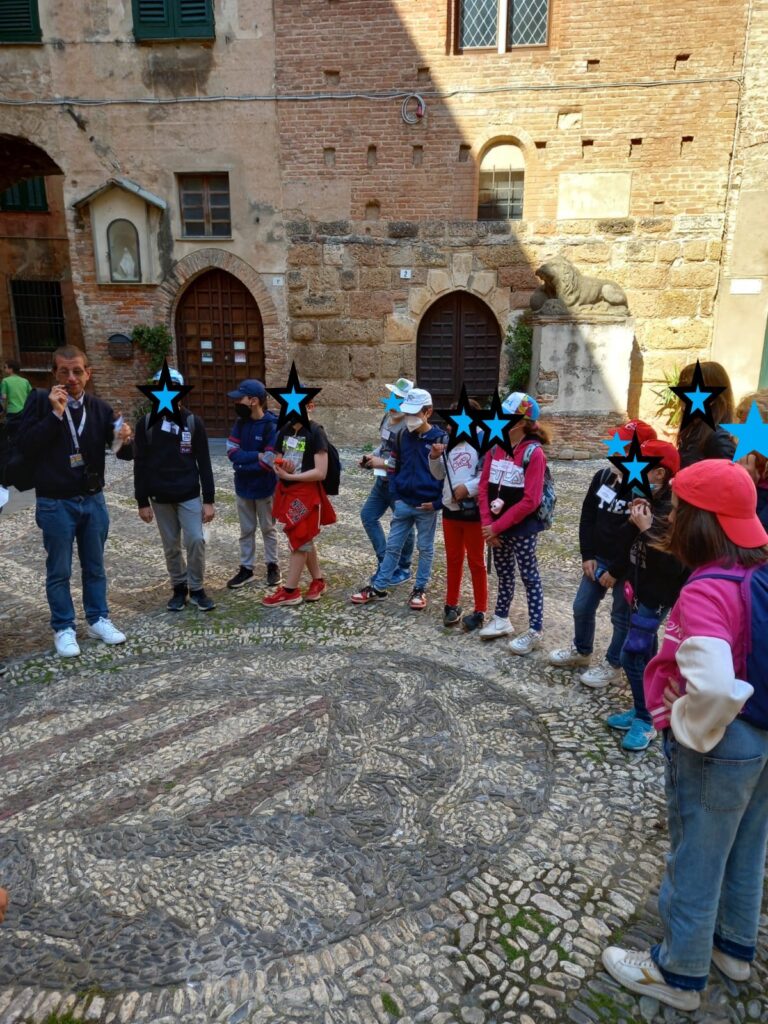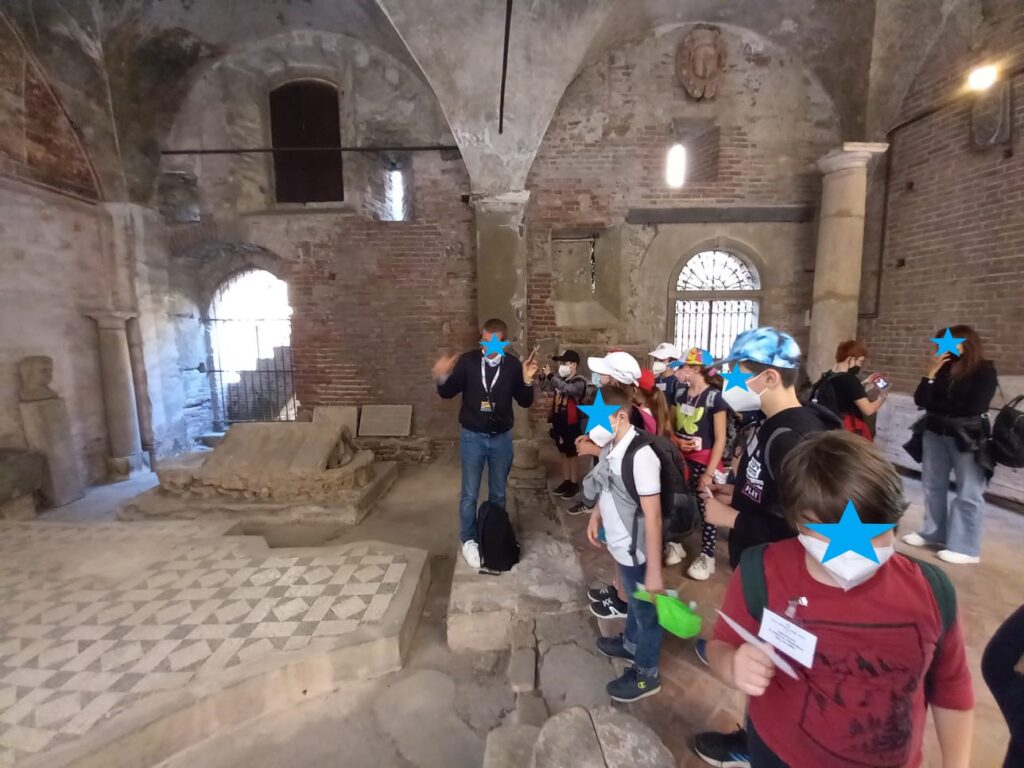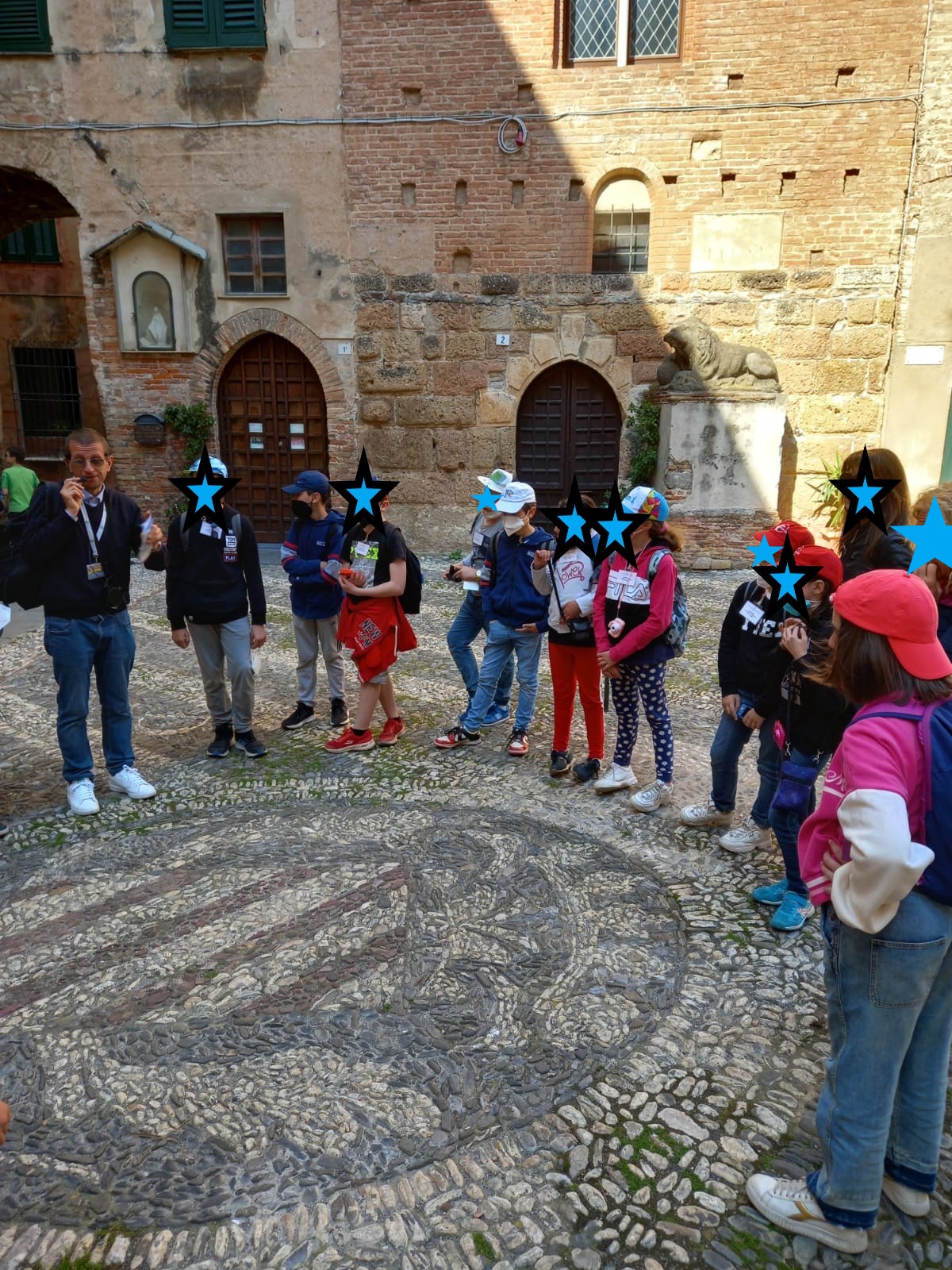

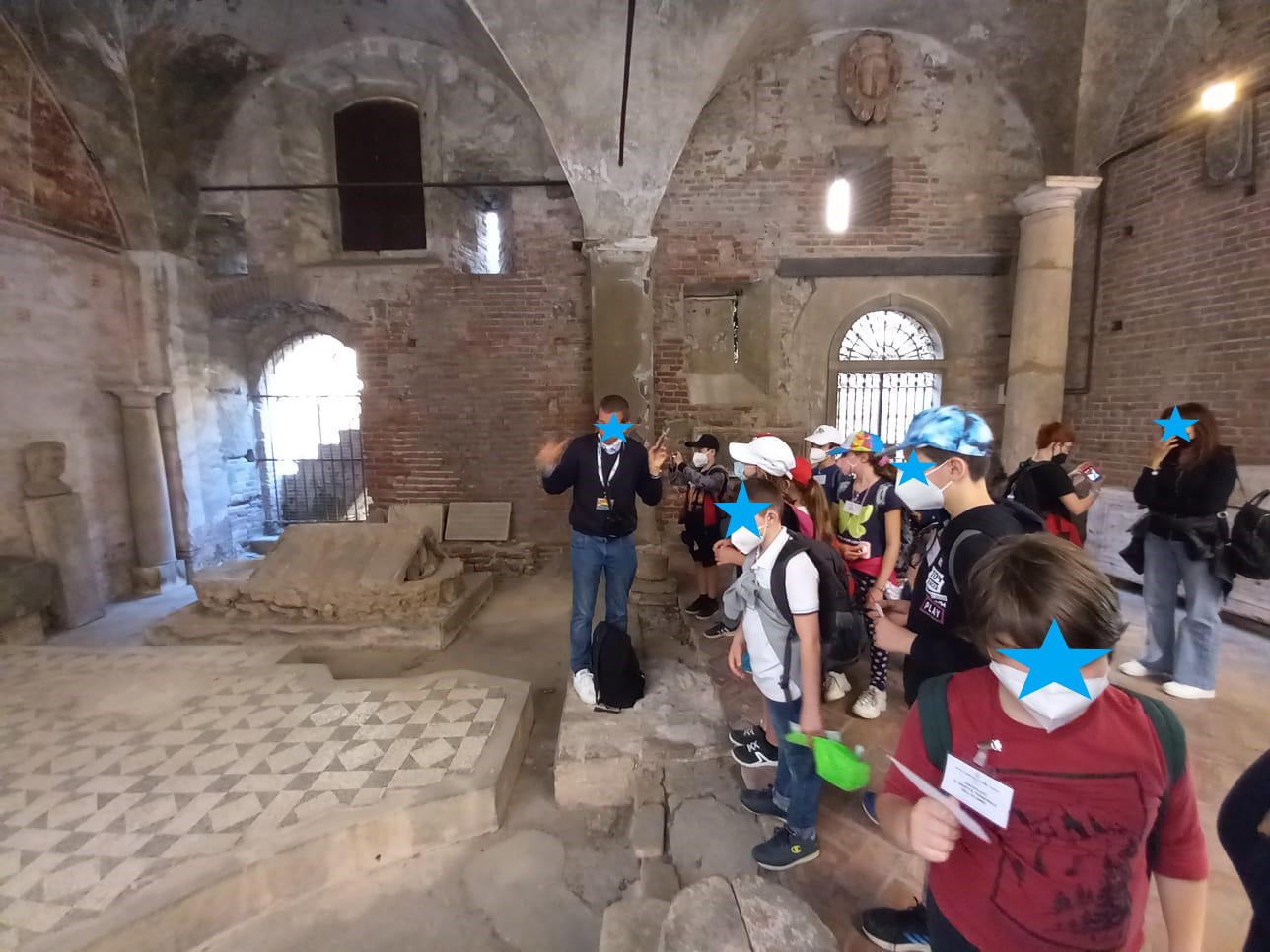
The guided tour through the historic center is divided into playful moments in which we will discover the vestiges of Albingaunum and explore aspects of Roman history (the clash with the Ligurian tribes, divide and rule...). We will discover together how the current historic center traces the structure of the Roman castrum below, articulated between the cardo and decumanus; in the old town hall (14th century) we will look for a statue from the baths, a Roman black-and-white tessellated floor that has resurfaced from underground, and a Roman well. Among marble finds and Latin epigraphs, between quizzes and questions, we will playfully move from the Republican to the Imperial Age. In the Cathedral ancient frescoes will guide us from the persecutions of the early Christians to the Edict of Constantine. During the educational activity in Albenga we will discover bas-reliefs with the faces of Roman figures crowned with laurel and approach the three lions made from the lapis albanus, a rock of volcanic origin widely used in ancient Rome.
The educational trip to Albenga may include a visit to a museum:
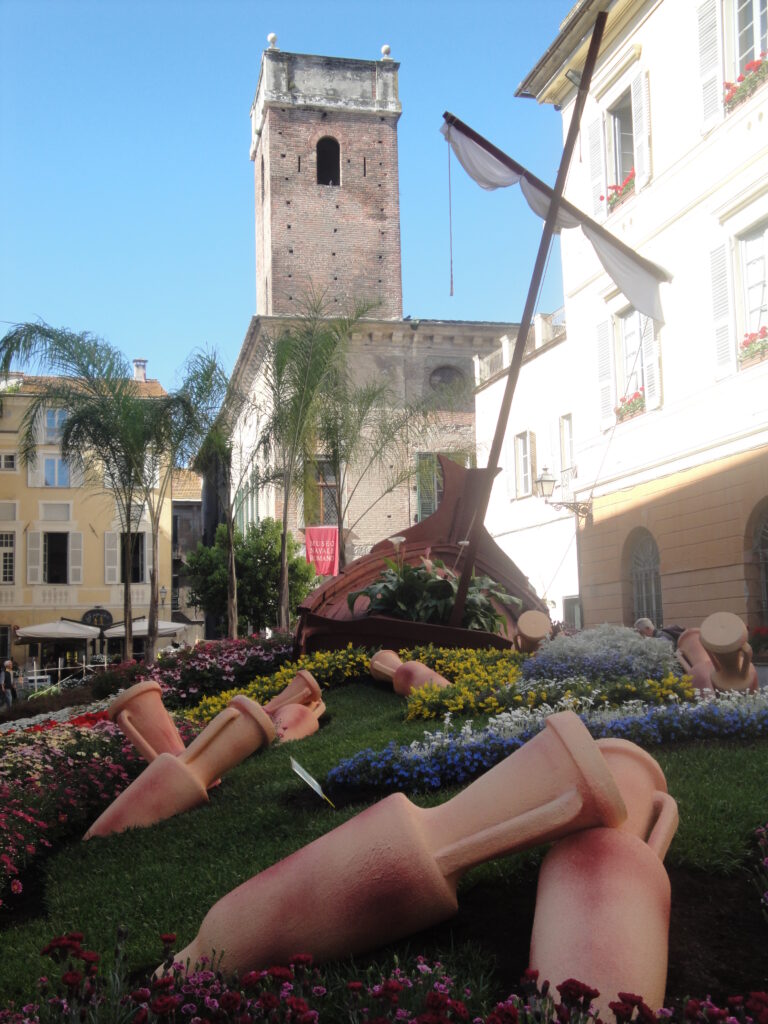
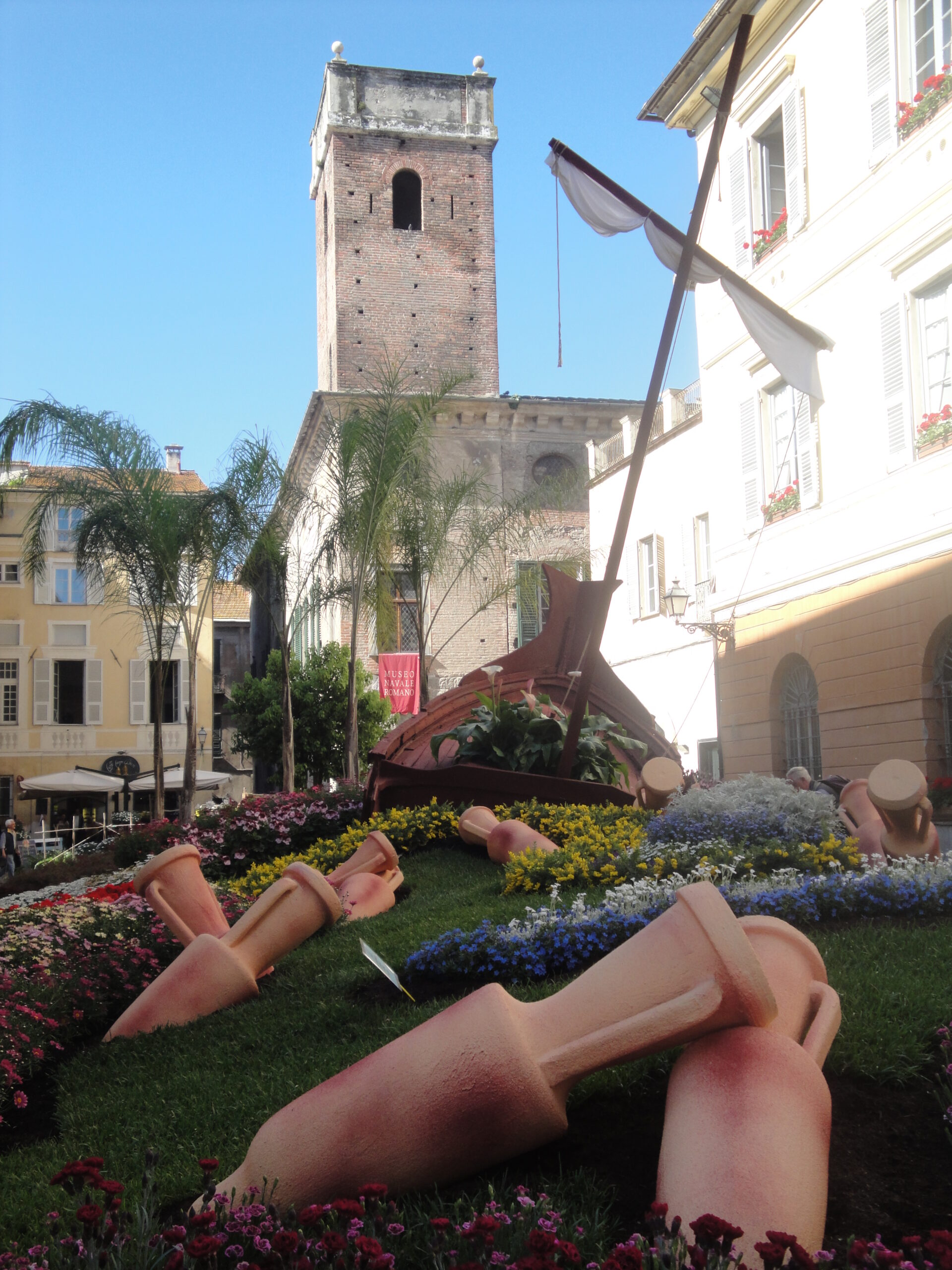
The Roman Naval Museum preserves artifacts and parts of the hull of the wreck of a large Roman honorary ship that was wrecked a mile off the coast in the first century BC. This vessel, which carried thousands of amphorae filled with wine, is one of the most important testimonies to the nautical art of ancient Rome. Among the exhibits we will look for pine cones used to cap the necks of amphorae, gambling dice and hazelnuts from the 1st century BC.
or
Magical Transparencies preserves artifacts (from the 1st century B.C. to the 3rd century A.D.), mainly made of glass, found during excavation campaigns in the Roman necropolis of Albingaunum. After the section devoted to the cosmetics of Roman matrons, we will discover some “duck-shaped” glasses, glass cutlery and plates, figs from the 1st century BC. , as well as, of course, the exceptional “blue plate.”.
In order to make a complete program (morning and afternoon), we suggest also providing:
VIA ROMANA JULIA AUGUSTA
Historical-naturalistic walk in front of Gallinaria Island, with its curious turtle shape.
Built in 13 B.C. by Octavian Augustus, it was for a long time the only thoroughfare through western Liguria. Along the first part of the route the remains of the Roman baths and amphitheater are visible. Continuing on, we will encounter impressive burial monuments (1st-2nd centuries AD) that were part of a large necropolis. The educational outing along the Via Julia Augusta is also a nature trail overlooking the sea, winding through terraces with olive trees and Mediterranean scrub.